· Markets & Investing · 6 min read
China's AI Mania Mirrors 1929 Radio Craze, Huxiu Warns
A Chinese financial outlet draws chilling parallels between the 1929 crash and today's global AI bubble, urging investors to watch for leverage and debt risks.
The Sell-Off That Shook Global Markets
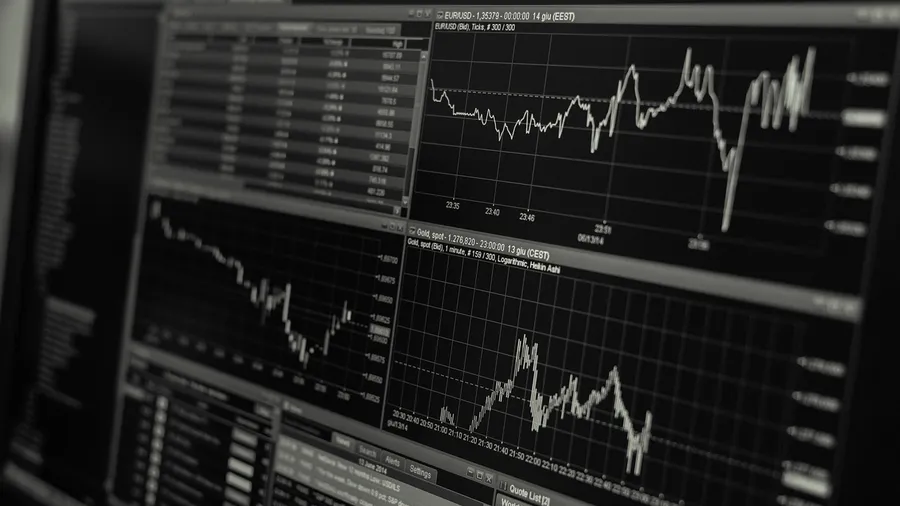
Last Friday, a routine U.S. jobs report ripped through global markets with a force that stunned even veterans. The Nasdaq Composite plummeted 4.18%, while the Philadelphia Semiconductor Index crashed 10.26% — its worst single-day rout since the pandemic. In a rare and ominous twist, traditional safe-haven gold sank 3.35% and silver cratered 8.08%, as reported by Huxiu, a leading Chinese business publication.
The trigger was a payroll figure that smashed expectations, reigniting fears that the Federal Reserve would keep rates higher for longer. But the synchronized collapse of risk assets and hedges signaled something deeper: the unwinding of a global speculative fabric that had been stretched too thin. Chinese stocks wobbled in sympathy, with the CSI 300 dipping 2.3% in after-hours trading, as investors braced for contagion.
Huxiu’s analysis, drawing on Andrew Ross Sorkin’s newly translated book 1929, argues that this is not just a tremor. It is a historical echo. “Real collapses are never isolated events,” the article notes, “but the culmination of long-accumulated risks, unfolding step by step into the abyss.”
A Century of Hubris: From Radio to AI
A century ago, the “Roaring Twenties” were propelled by a wave of transformative technologies — automobiles, electricity, washing machines, and, above all, radio. Radio Corporation of America (RCA) was the era’s unicorn, its stock rocketing to $535 per share without ever paying a dividend. As Huxiu recounts, Wall Street’s elite assured the public that “the stock market is now a global market. Prices will keep climbing forever.”
Today’s artificial intelligence boom is eerily similar. Nvidia’s GPUs are the new radios, and companies like OpenAI or China’s SenseTime command valuations based on future potential, not current earnings. The Chinese A-share market has seen a frenzy around AI-themed stocks, with some small-cap firms surging 200% just by adding “AI” to their name. Huxiu quotes Sorkin’s central insight: “No matter how many warnings are issued, people find new ways to believe the good times will never end, and to dress hope up as certainty.”
The original bubble, Sorkin’s research reveals, was not a sudden lightning strike but a slow-motion disaster fueled by a financial innovation: the margin account. Investors could buy stocks with just 10% or 20% down, amplifying gains and, when the tide turned, accelerating losses. By 1929, brokers’ loans had ballooned to $8.5 billion — more than the entire money supply of the U.S. at the time.
The Fragile Architecture of Debt
The real fault line in 1929 was debt, not equity. Huxiu points to the OECD’s 2026 Global Debt Report: global sovereign and corporate bonds have now surpassed $109 trillion, an all-time high. U.S. federal debt has swelled from $23 trillion to nearly $40 trillion, with interest payments alone devouring fiscal space. China, too, faces a precarious debt mountain. Local government financing vehicles (LGFVs) and the property sector sit on an estimated $9 trillion in liabilities, with many developers still teetering after years of deleveraging.
High interest rates are a universal stress test. The Federal Reserve’s refusal to cut quickly, and the People’s Bank of China’s cautious easing, mean that refinancing these debts becomes ever more expensive. Just as 1929’s margin calls triggered a cascade of forced selling, today’s interconnected global markets could see bond and equity liquidations feed on each other.
Huxiu notes that in the 1920s, the weakness was concentrated in agricultural debt and European war reparations; today, it’s sovereign bonds, shadow banking, and leveraged tech bets. Yet the pattern repeats: when credit tightens, the entities that borrowed most recklessly are the first to drown.
1929 vs. 2026: A Data Comparison
The parallels are not just metaphorical. They crystallize in the numbers:
| Indicator | 1929 | 2026 |
|---|---|---|
| Tech darling | RCA (price $535, no dividend) | Nvidia (PE ratio ~50), AI concept stocks in China up 200% |
| Margin debt | Brokers’ loans $8.5bn (~40% of GDP) | China margin lending ~RMB 1.5tn; US FINRA margin debt near record highs |
| Sovereign debt | US federal debt $16.9bn (1930) | US federal debt ~$40tn; global bonds $109tn (OECD 2026) |
| Public sentiment | “Everybody Ought to Be Rich” article | Chinese retail investors flooding into AI ETFs, social media calls for “all-in” |
| Warning signs ignored | Industrial production already falling | China property slump, global trade fragmentation, yield curve inversions |
Sources: Huxiu article citing Sorkin’s 1929 and OECD; current market data from public exchanges.
The table reveals that while the assets du jour have changed, the emotional architecture is identical. In China, the retail investor army — now numbering over 220 million accounts — mirrors the elevator operators and shoeshine boys who traded on margin in 1929. When the Hang Seng Tech Index jumps 3% one day and crashes the next, it’s not just algorithms; it’s human greed and fear, amplified by leverage.
China’s Own Cycle of Boom and Leverage
China’s policymakers have spent two years trying to deflate the property bubble without triggering a systemic crisis. But the urge to speculate has simply migrated to other corners: small-cap AI stocks, cryptocurrency-linked companies, and even government bonds (the PBOC recently intervened to cool a bond-market rally). Huxiu’s cautionary tale is not just for Wall Street; it is a red alert for Shanghai and Shenzhen.
The “common prosperity” drive and regulatory crackdowns of 2021–22 were meant to curb excess, but as history shows, regulatory brakes often fail when the boom is in full swing. As the source reminds us, in 1929 even the most respected economists insisted a “new era” had dawned where old rules no longer applied. Today, AI evangelists promise productivity miracles that will erase debt burdens. That is precisely the kind of narrative that preceded the Great Depression.
Sorkin’s book, based on newly unsealed NY Fed minutes and thousands of private letters, reveals how central bankers were trapped: they saw the bubble but feared that pricking it would cause a collapse. China’s central bank faces a similar conundrum today. Raising rates to cool speculation could crush the property market further; easing too much could inflate new bubbles.
What to Watch
- China’s margin lending balances: A sharp rise above RMB 2 trillion would indicate retail leverage back to dangerously speculative levels, similar to 2015’s bubble. Watch monthly CSDC data.
- PBoC’s loan prime rate decisions: If the PBOC cuts rates aggressively to support growth, it may fuel tech speculation. If it holds, weak property stocks could drag down sentiment.
- Global bond market tremors: A spike in U.S. Treasury yields above 5% would tighten financial conditions worldwide; China’s export-heavy economy would feel the pinch, and A-share tech valuations would compress.
- AI-themed ETF flows in China: Sharp inflows followed by outflows could signal a retail stampede. Monitor the largest AI ETFs like the ChinaAMC CSI AI ETF for signs of panic or greed.
The historic parallel is not a forecast of a 1929-style crash, but a pattern of human behavior that repeats across centuries. As Huxiu’s article concludes, “Markets may change, but the DNA of a bubble remains the same.” Understanding that DNA could be the only edge investors have left.