· Tech & Innovation · 5 min read
ByteDance Denies Car Plans, But AIVA Launch Speaks Volumes
ByteDance's Doubao AI starred at Seres' AIVA car launch, contradicting its denial of car ambitions—the same pattern from its failed phone and VR plays.
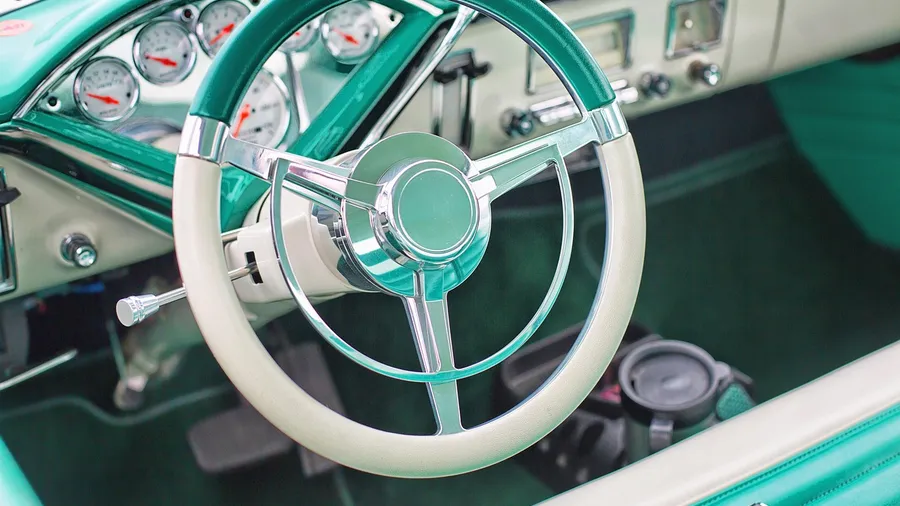
ByteDance’s Doubao AI and Volcano Engine dominated the stage at the June 9, 2026 launch of AIVA, a new AI car brand from Seres—just three days after ByteDance declared it has “no plans to build or launch a car brand.” The absence of any Huawei logo, a fixture on previous Seres models, was striking. Instead, the event showcased ByteDance’s deep integration into the vehicle’s intelligent cockpit, a role it publicly denies while aggressively pursuing.
This is not a new play. ByteDance has a decade-long record of plunging into hardware, failing or retreating, and then denying long-term intentions. The AIVA launch, however, signals a sharper ambition: to replicate Huawei’s playbook of embedding its AI ecosystem across third-party devices, turning every car—and eventually every screen—into a portal for its services.
The Hardware Itch: From Phones to Lamps to VR
In 2019, ByteDance acquired Smartisan’s phone unit, hoping to parlay its software prowess into a mobile device. The Nut R2, released in 2020, integrated ByteDance’s content services, but it barely registered in a market dominated by Huawei, Xiaomi, Oppo, and Vivo. By 2021, the phone line was shuttered, according to Huxiu, with the team folded into education hardware.
That educational push—a smart lamp—briefly looked promising. The Dali Smart Lamp, combining a lamp with a learning tablet, sold over 1 million units in 2021. But a regulatory crackdown on private tutoring (“double reduction” policy) gutted the ed-tech sector, forcing ByteDance to slash its hardware ambitions yet again.
Undeterred, ByteDance paid roughly $9 billion for Pico in 2021, betting on VR as the metaverse’s gateway. Pico shipped upgraded headsets, but industry-wide headwinds crushed hopes: VR shipments fell 56% year-on-year in the first half of 2023, and Pico’s own sales dropped over 50%, per Communications Today. A staff cut of more than half followed.
ByteDance’s Hardware Track Record
| Venture | Year Launched/Acquired | Peak Achievement | Outcome |
|---|---|---|---|
| Smartisan Nut R2 Phone | 2019 (acquisition) | Integrated ByteDance services | Shut down 2021; negligible market share |
| Dali Smart Lamp | 2020 | 1 million+ units sold in 2021 | Decimated by 2021 “double reduction” policy |
| Pico VR Headsets | 2021 ($9B acquisition) | Became China’s leading VR brand briefly | Sales halved by 2023; mass layoffs |
| AIVA AI Car Brand | 2026 (with Seres) | Full AI cockpit by Doubao | Launched amid official denials of car-making |
The Huawei Shadow
ByteDance’s automotive strategy mirrors Huawei’s—and it’s not subtle. Huawei built a tier-1 supplier business, supplying smart vehicle solutions to automakers like Seres to avoid competing directly with its own car brand. That model has made Seres’ AITO-branded cars wildly successful, with Huawei’s HarmonyOS inside.
ByteDance wants the same for Doubao. At AIVA’s debut, Volcano Engine Vice President Yang Liwei took the stage, not a car executive. The car’s cockpit runs on ByteDance’s large language model, promising natural voice commands, personalized recommendations, and seamless connectivity with Douyin (TikTok’s Chinese version). It is a bet that the next major computing platform is the vehicle, and whoever controls the AI inside it owns a critical distribution channel.
Yet the divergence from Huawei is glaring. Huawei spent decades building hardware expertise before layering software. ByteDance is a software-native company trying to implant itself into hardware it does not build—a pattern that failed in phones, lamps, and VR. Its hardware partners (Seres for cars, ZTE for an upcoming AI phone) bear the manufacturing burden, but the consumer sees ByteDance’s brand. If the product disappoints, it’s ByteDance’s reputation at risk.
The Entry-Point Anxiety
Behind these hardware feints lies a structural vulnerability: ByteDance has no direct pipe to users. Its core business—content recommendation—depends on apps running on platforms controlled by Apple, Google, Huawei, and Xiaomi. As AI becomes the primary interface, ByteDance’s Doubao model risks being packaged into someone else’s assistant (like Apple Intelligence) or locked out entirely. A car, like a phone, is a personal device. Embedding Doubao deeply gives ByteDance a seat at the table, even if it doesn’t own the table.
The AIVA launch suggests ByteDance is willing to blur the line between supplier and co-branded experience. Seres’ previous joint venture with Huawei resulted in AITO vehicles that many consumers perceive as Huawei cars. ByteDance may aspire to the same halo effect.
Implications for the Smart EV Race
- Huawei’s dominance in China’s smart car tier-1 space will face a credible challenger. ByteDance brings a massive AI model, consumer data, and an ecosystem of apps that can turn a car into a personalized media hub. Unlike Huawei’s more enterprise-centric image, ByteDance is entertainment-first, which could resonate with younger buyers.
- Automakers get a new bargaining chip. Seres, by adding a second tech giant, reduces its dependency on Huawei and signals to other carmakers that they can do the same. This could accelerate the fragmentation of China’s smart cockpit standards, already split between Huawei’s HarmonyOS, Baidu’s DuerOS, and Tencent TAI.
- ByteDance’s financial muscle allows it to subsidize adoption. The company can afford to offer Doubao integration at thin margins, much as it did with smart lamps, to secure footholds. If AIVA gains traction, expect rapid licensing to other budget and mid-range EV makers.
- Regulatory scrutiny is likely. As a dominant internet platform, ByteDance’s move into automotive data—location, biometrics, driving habits—will draw attention from China’s cyberspace and antitrust regulators, especially if it bundles services in anti-competitive ways.
What to Watch
- AIVA’s first-year sales and consumer satisfaction ratings. High numbers would validate the model; weak uptake could mirror past hardware flops and force a retreat.
- ByteDance’s ZTE AI phone (slated for Q2 2026). If it ties into the car experience, ByteDance may be constructing a cross-device ecosystem that competes not just with Huawei but with Xiaomi’s “Car+Home” strategy.
- Moves by Huawei. Will it tighten exclusivity with Seres, or extend its own AI model to more vehicle functions to block ByteDance? Any restructuring of the Seres-Huawei relationship is a signal.
- Pico’s fate. A revival of VR investment could indicate ByteDance still sees a multi-device future; another cut would suggest a pivot to automotive as the primary hardware play.