· Economy & Trade · 6 min read
Astellas Defies Spy Fears with $157M China R&D Bet
Astellas opens its first China R&D center—a $157M bet on patient data and clinical speed, even after a detained employee spooked Tokyo.

Late one evening in March 2023, a Japanese executive at Astellas Pharma was taken into custody by Chinese authorities. The charge: suspicion of espionage under China’s freshly expanded Anti-Espionage Law. For months, the industry watched. Would Japan’s biopharma pull back from China, just as chipmakers and manufacturers were crafting “China+1” strategies? The answer came this spring, and it was a shock: Astellas is doing the opposite.
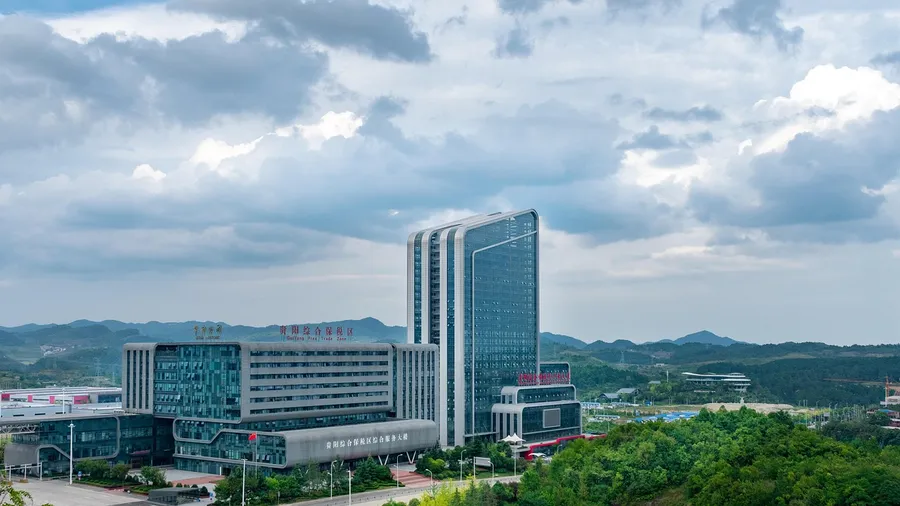
In a move that upends the decoupling narrative, the Tokyo-based drugmaker has just opened its first-ever R&D center in China—a brand-new facility backed by an investment of roughly RMB 11 billion (about $157 million), according to a Yicai report. That’s not a hedged, small-scale pilot. It’s a full-throated declaration that the world’s third-largest drug market cannot be ignored, spy case or no spy case.
A Spy Case That Should Have Frozen Investment
For most global executives, a detained employee and an espionage probe are the kind of headline that triggers an emergency board meeting, a review of China exposure, and a slow drift toward Southeast Asia. The 2023 arrest wasn’t an isolated incident. It followed a broader tightening that saw China’s state security apparatus target foreign employees in consulting, biotech, and data-heavy sectors. Several Japanese nationals were detained, making Tokyo’s biggest firms scramble for legal counsel and risk assessments.
Yet Yicai reports that the espionage investigation “did not shake the long-term investment plans” of Japanese pharmaceutical companies. Why? Because the alternative—retreating from China—is a non-starter for any drugmaker serious about global R&D. The math is too compelling.
Why the World’s Third-Largest Drug Market Is Too Big to Snub
China’s pharmaceutical market surpassed ¥2.2 trillion (roughly $315 billion) in 2023. It’s growing at a compound annual rate of about 6%, far outpacing the flat or declining markets of Japan and Europe. For Astellas, which generates around 25% of its revenue from Asia outside Japan, China is already a top-three revenue generator. The problem? Historically, Astellas ran its China operations as a commercial outpost, relying on imported drugs and licensing deals. The new R&D center flips that model.
Getting closer to Chinese patients isn’t just about selling more pills. It’s about owning the clinical data that regulators in Beijing, Washington, and Brussels increasingly demand. China’s massive, treatment-naive patient pools—especially in oncology, metabolic disease, and rare disorders—can slash enrollment times for clinical trials by 30–50% compared to Western sites. As Yicai highlights, the center will focus on “leveraging China’s clinical data and huge patient base” to accelerate global pipelines. In plain terms: running trials in China means bringing a blockbuster to market a year or two earlier, an advantage worth far more than $157 million.
China’s Clinical Gold Rush: Speed and Scale
Astellas isn’t the only Japanese player racing in. Takeda doubled its headcount in China’s development division and now runs more than 40 clinical trials there. Daiichi Sankyo inked deals with local biotechs to tap into Chinese AI-driven drug discovery. Even the spy case hasn’t cooled the appetite. Rather, it’s accelerated a quiet realignment: Japanese pharma is treating geopolitical risk not as a reason to leave, but as a cost of doing business that can be managed.
That’s partly because China’s regulatory environment for clinical trials has improved dramatically. Since 2017, China’s drug regulator has aligned with ICH standards, cutting approval times and allowing foreign data to support domestic filings. The National Medical Products Administration (NMPA) now clears innovative drugs from overseas more quickly, creating a virtuous cycle: more trials lead to faster approvals, which lead to more revenue, which funds more R&D. Astellas’s new center will plug directly into that loop, developing molecules for both the Chinese and global markets.
The Unspoken Cost: A Geopolitical Risk Premium
Of course, no amount of clinical efficiency erases the fact that foreign companies operate under a legal system where “espionage” can sometimes become a catch-all for data disputes or nationalistic pressure. The same Anti-Espionage Law that snared the Astellas employee now requires any foreign firm dealing with “state secrets” to report potential breaches, with penalties that can cripple a business. For a pharma company managing proprietary compound libraries and sensitive patient data, the line between legitimate research and an investigation is thin.
Industry insiders told Yicai that Japanese companies are responding with a mix of compliance overhauls and careful localization. Astellas will likely house its most sensitive early-stage discovery away from the China center, focusing the Shanghai facility on clinical development, real-world evidence, and medical affairs—functions where the risk of running afoul of security laws is lower, and where the strategic payoff is highest. It’s a calculated segmentation, not a blanket bet. The $157 million price tag, while substantial, is also relative: Astellas’s global R&D budget was around ¥276 billion ($1.9 billion) in the last fiscal year, meaning the China push accounts for less than 8% of its total innovation spend. The company can afford a loss if things go wrong.
What This Signals About Japanese Industry’s China Bet
For years, the narrative around Japan and China has been one of slow divorce. Supply chains shifting to Vietnam. Automakers hedging with India. Semiconductors governed by Washington’s export controls. But pharma doesn’t play by the same rules. You can’t decouple from a patient population. You can’t offshore clinical trials to Indonesia if the disease genetics and treatment pathways are different. And you certainly can’t ignore a market that’s projected to represent 25% of global drug sales by 2030.
Astellas’s move signals a split inside Japanese boardrooms. On one side, manufacturers and tech firms are being pushed to reduce exposure. On the other, drugmakers are doubling down, calculating that the commercial upside dwarfs the regulatory hazard. This isn’t a naïve bet. It reflects a cold-eyed view that Beijing, despite its security theater, still needs foreign pharma to meet its domestic healthcare goals. China’s population is aging fast—by 2035, more than 400 million citizens will be over 60. The government can’t afford to wage sweeping crackdowns on the companies developing the oncology, Alzheimer’s, and cardiovascular therapies that its stability depends on.
That mutual dependence is the real foundation of the Astellas investment, not any ideological trust or détente. The spy case was a warning shot, but not a declaration of war. Japanese pharma seems to have read it exactly that way. The doors remain open; you just need to walk through them more carefully than before.
So when Astellas’s CEO cut the ribbon on the new Shanghai center this spring, it wasn’t a sign of geopolitical myopia. It was a signal that, for one key slice of Japan Inc., China is still the most essential market—and $157 million is a small price to pay for a seat at the table.